

Second of three pieces on Denethor and his sons. The first, The Son He Loved Best, is about Boromir. Each stands on its own.
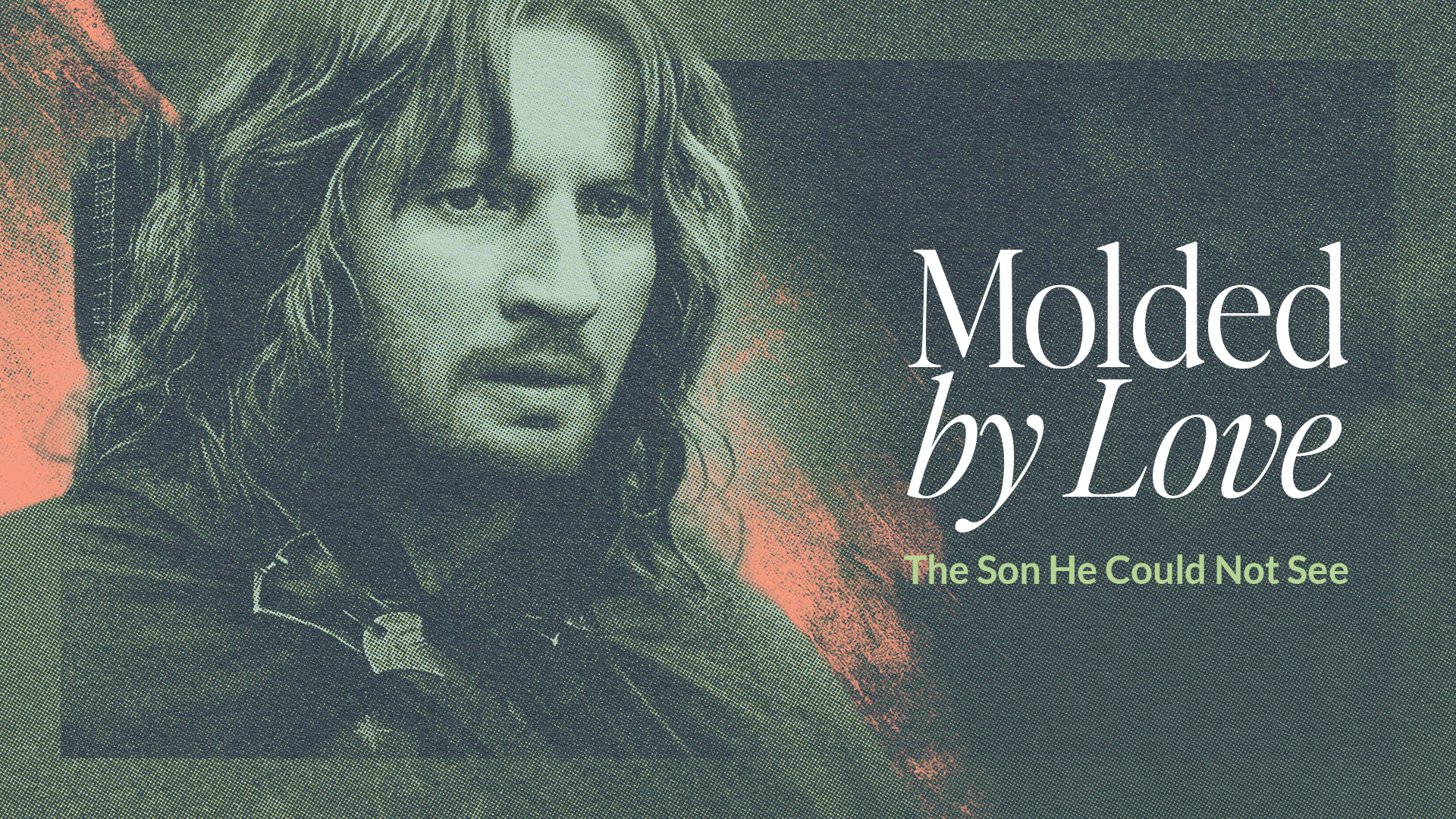
Denethor, son of Echthelion and Steward of Gondor, had two sons, and he failed them in different ways.
He loved his elder son, Boromir, and formed him into a man who believed his worth was defined by his usefulness. That formation held right up until Frodo refused to hand over the Ring, and then it broke him. I wrote about Boromir in Part 1 of this series.
This writing concerns his younger brother.
Denethor never warmed to Faramir, for reasons less obvious than they appear. Because he was favored, Boromir looks like the son who took after his father. Yet Gandalf reveals that the opposite is true. The blood of Westernesse ran true in the younger son: the foresight, the restraint, the interior complexity. The son who most resembled him was the son he could not bear.
This leaves us with a strange question. How does a man miss the child who is most like him? And why could everyone else in that city see what the father could not?
THE MAN THEY COULD NOT SEE
Let’s begin with the ordinary men of the Guard. Pippin, newly arrived and full of questions, receives an assessment of the captain of Gondor from a soldier, Beregond. What the man says of Faramir contradicts everything Denethor believed:
“He is bold, more bold than many deem; for in these days men are slow to believe that a captain can be wise and learned in the scrolls of lore and song, as he is, and yet a man of hardihood and swift judgement in the field. But such is Faramir. Less reckless and eager than Boromir, but not less resolute.”
Beregond will not let the two be pulled apart. He is naming an integration of wisdom and strength, held together in one man without either diminishing the other. And he tells us in the same breath why this was difficult to see. In these days men are slow to believe that both can live in the same person. The age had split them into opposites. A man who read was assumed to be soft. A man who fought was assumed to be simple. This is not an uncommon perspective in our current age. Modern male psychologies are assumed to be split into toxicity or weakness. We have the macho man or the wimp. The narcissist or the dependent. And many men seem to vacillate between the two.
Here we find an echo of why Denethor cannot see his son.
We can only recognize in another person what we have managed to hold in ourselves. Denethor possessed both of these gifts. Tolkien describes him as tall and valiant, more kingly than any man Gondor had seen in many lives of men, and wise also, far-sighted, and learned in lore. Valiant and learned, named in the same breath: the very pairing Beregond marvels at in the son. But he never held them in peace. They were never integrated. In him they were at war, lore feeding fear and power feeding despair, his whole interior life bent over a seeing stone that offered him nothing except force to manage his grief. A man looking through that instrument, in that hour, has no interior space for integration. Only parts of himself that he could not reconcile. So his son’s freedom did not register as strength. It registered as insufficiency.
Those who are disintegrated struggle to make sense of those who are integrated. What they see instead is the absence of what their interior parts value.
And it was not only the soldiers who had served under him for years. Samwise Gamgee met Faramir for roughly a day, under conditions of maximum suspicion. The hobbit had every reason to keep his guard up, as was his custom, and yet Faramir’s goodness, reflected in his decision to release the ring-bearer and his friend, bypassed Sam’s defenses. “You have an air too, sir,” he tells him, “that reminds me of, of, well, Gandalf, of wizards.” Faramir turns the compliment aside toward his ancestry. “Maybe you discern from far away the air of Númenor.”
Both are angles into the same truth. What Sam perceives genuinely is the old blood, what Gandalf said ran true in Faramir. But the name Sam reaches for is Gandalf. Nature and formation had become indistinguishable from the outside, because the formation guided nature into an integrated Self. Denethor had the same blood, and it produced a troubled man who despaired after wrestling with Sauron in the seeing stone. Faramir had the same blood, yet was open to a teacher his father rejected, suspecting that the wizard meant to take his power.
A gardener who had known Faramir one day could see his quality. His father had a lifetime and could not.
WHAT THE CITY SAW
What Samwise perceived resounded through Minas Tirith itself. The men of the Guard loved Faramir the way soldiers love a captain they would follow anywhere. A man who would both guide and fight alongside them. They offered the approval he would never receive from his own father. An admiration that grew out of his service to them. They were simply loving him back.
Notice the shape of Faramir’s love. He spent it on the men under his command, on hobbits he had every legal right to deliver to his father, on a stranger who wandered into his territory carrying the most dangerous of weapons. None of them could do anything for him. That is what made the regard coming back to him something other than an exchange.
This contrasts with what his brother commanded, and the difference is the one Faramir himself named. He does not love the bright sword for its sharpness, nor the arrow for its swiftness, nor the warrior for his glory. He loves only that which they defend. Men followed Boromir for what he was. Men followed Faramir for what he loved.
None of which made him mild, in the way people use that word as a quiet insult. He fought. He held Osgiliath. He rode out under an unjust command and was carried home nearly dead because of it. He waged battle, but not for glory. Battle as an end misses the point. The point was what the battle was in service of, and a man who is clear about that turns out to be steadier than a man who is not. Less reckless, as Beregond put it, and not less resolute.
That is the loyalty a city gives to a man who loves what the city is for.
WHICH WAY LOVE TRAVELS
Denethor’s love ran in the opposite direction, toward himself. This direction is the whole of the problem. A father’s love is meant to travel one way. He wills his son’s good for his son’s sake, and whatever comes back to him is a byproduct he never required. Denethor required it. He needed Boromir to relieve his despair, and a son who is needed that way is not being loved so much as spent. Which leaves nothing at all for Faramir, the son who could relieve nothing, but instead reminds Denethor of his own limitations.
THE SECOND SON
This is the same wound seen from another side, and this side rests on the office the family held.
The Stewards of Gondor rule in the king’s absence. The position is provisional by definition. They hold the throne for someone else, and do not sit in it. Denethor’s line had done this for nearly a thousand years, and somewhere in those centuries the holding had quietly become covetousness. And so Denethor would rather burn than be reduced to a caretaker for a returning king, though this is what he had been the whole time.
He did not want to steward power. He wanted to possess and wield it. Boromir inherited that exactly, seeking the Ring not out of malice but to wield it against the Enemy according to his father’s designs, to seize the weapon that would save Gondor. Both of them wanted the good and sought to achieve it through means of control. This is the real danger of the Ring. It plays off of one’s psychological wounds, off of one’s weakness, and tempts its bearer to use evil (power) as a means to alleviate those wounds.
Faramir was the second son. And he was rejected by his father because of how similar they were. Denethor saw in his son that same inability to overcome death by means of power, a weakness he perceived in himself. And having no prospect of possessing power through rule, Faramir was untethered from the city and his father both, and came to love the thing itself rather than the possession of it. He loved Gondor rather than his position in it.
Which is why he can refuse the Ring without apparent effort, while his father and brother could not. It was never a contest of willpower. Denethor and Boromir wanted power in order to defeat evil. Faramir renounced power in order to serve the good. Same aim, opposite road, and only one of those roads survives contact with the Ring.
Now see this in light of Gandalf’s remark about the blood running true in him. What Denethor could not bear was not simply that his younger son was alike in character. It was that the son mirrored his nature and chose what he could not. Same raw material, same gifts, same lineage, one man grasping and the other holding open handed. Faramir was a living witness that his father’s road had not been necessary.
That is far more challenging to look at than a son who is simply different. A son who is unlike you is a relief and a hope to make up for your weaknesses. A son who is like you and chose in freedom what you could not is a verdict.
So Faramir found another father. But the shadow of the first one’s verdict is long. How he escaped it, and what it cost the men who loved him, is the subject of what follows.
Concluded in “The Man Who Owned No Realm,” on what it takes to overturn a father’s verdict, and what it cost a soldier named Beregond to carry Faramir out of his father’s fire.