

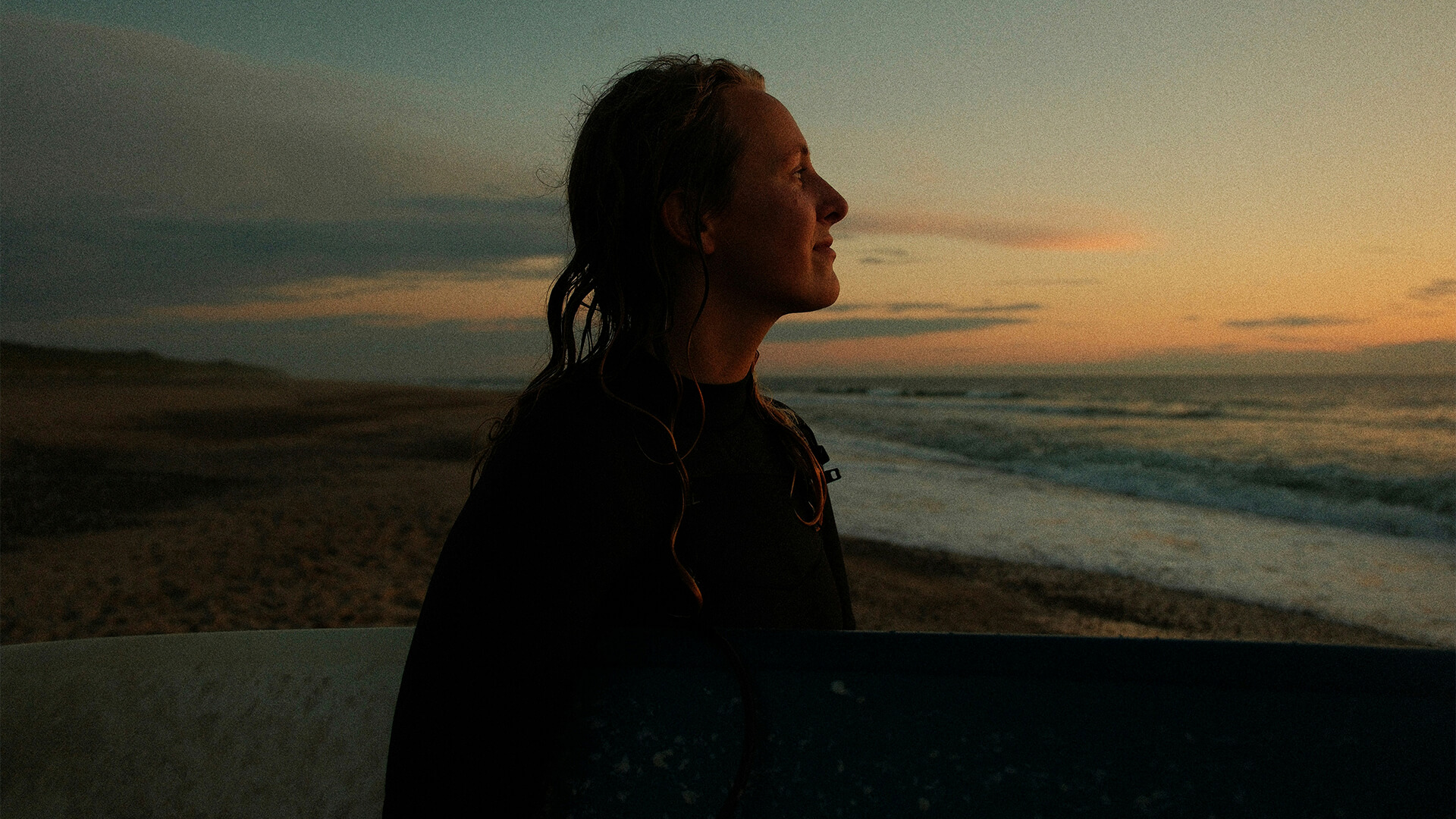
I fell off my board and hit something hard. I assumed it was a rock. My back was aching. I squirmed for a moment before I realized it was not a rock — I had landed directly on top of a sea turtle.
After a quick, inadvertent expletive and an appropriate level of fear, I had the rare chance to appreciate one of these creatures up close. He was huge, exceptionally hard, and graceful. In retrospect, I can see how this is something of a metaphor for an important aspect of life.
This happened on my honeymoon in Hawaii, where I tried surfing for the first time and was genuinely, embarrassingly bad at it. I loved it anyway. On his most recent episode of Being Human, Dr. Greg sat down with a senior in college studying psychology and got into something I used to take for granted: discernment. Not the capital-D kind you hear about in vocation talks, but the everyday kind — school, work, whatever the next step is.
What We Actually Want From the Future
There’s a reason we crave certainty about what’s next. We want to prepare. We want to brace ourselves, plan around it, avoid getting blindsided or missing an opportunity. That instinct isn’t wrong, exactly; it’s just aimed at something God rarely hands out in advance, or makes us search for like a needle in a haystack.
At some point, a lot of us started treating discernment like a forecast we’re owed, or an equation to be solved. I feel that more than ever now as a parent, responsible for little persons of my own. I want to know what the twelve-month plan is. Part of me feels like if God really wanted that too, He’d keep me in the loop. Another part of me thinks it’s a question of willpower — that I can white-knuckle my way to the future I want. But that’s not really how any of this has ever historically worked for me. It’s worked more like the ocean works.
A Kid Who Never Expected a Future
For most of my younger life, I was living pretty YOLO. Not thinking too hard about tomorrow, because somewhere underneath it all, I was fairly certain there wasn’t much of a tomorrow worth planning for. Future-me wasn’t really a character I knew anything about. In fact, when I closed my eyes and considered my five-year plan, all I could picture was a blank, black page.
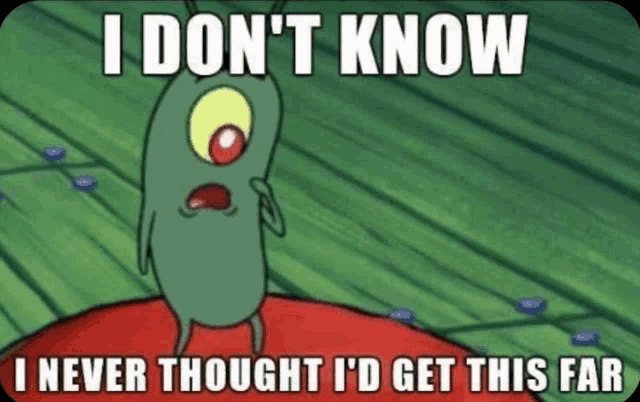
Senior year of college, there was a meme going around: Plankton from SpongeBob, getting interviewed after finally getting his hands on the Krabby Patty formula. Someone asks him what he’s going to do next. His answer: “I don’t know, I never thought I’d get this far.” I jokingly reposted it and shared it with friends and family. They laughed too, and yet behind the humor, that meme was describing a fear within me. I had made it to senior year without ever really expecting to make it to senior year, and I had absolutely no plan for what came after.
And yet, right around that time, I felt a prompting to give St. Francis my intentions to serve the poorest of the poor, and to be sent wherever God wanted me. No five-year plan attached — just handed Him my blank, black page. Just a yes to whatever came next. Looking back, that was a distinct time I paddled out without knowing what was coming.
Every Step, a Question Mark
That “yes” led me to working at a halfway house. The halfway house led to grad school. Grad school led to a job at a prison. And that prison led me to CatholicPsych. At every single one of those transitions, I had no idea what was supposed to come after the one I was standing in. Each step arrived with its own big, uncomfortable question mark hanging over it.
That’s what paddling out actually feels like, if I’m honest. You sit on the board, you scan the horizon, and for a time nothing happens. Flat water. No wave in sight. You just wait, looking to your left and right, watching others congregate in other sections of the beach. You feel a little ridiculous, becoming aware that you don’t really know what you’re doing. You get tips from locals and naturals on their boards, who always make the technique sound easier than it feels. I felt that at the halfway house. I felt it again in grad school. I felt it again walking into a prison for the first time as a brand-new counselor with no idea what I was doing.
Looking back now, having landed at CatholicPsych, I can see the thread connecting all of it. But I couldn’t see it then. Nobody can see it then. That’s kind of the point.
That instinct to want the thread visible in advance is exactly what Pope Leo XIV is naming when he warns that our technocratic age tempts us to equate a full life with having more, eliminating uncertainty, and exerting total control, and that this same instinct can gradually reshape how we see ourselves, treating the human person as a project to be optimized rather than someone made for relationship (Magnifica Humanitas, 112). He goes further, naming our limits, weakness, suffering, not-knowing, not as defects to be engineered away, but as the very places where our humanity matures and opens itself to others (118).
Reading the Swell
One of our limits is our inability to control the forces of nature. The Hawaiians know this in their bones: you cannot force a wave. You can paddle, you can position yourself, you can do everything technically right, and the wave still comes when it comes, not a second sooner. And when it does come, it rarely looks like what you expected. Sometimes you catch it clean. Sometimes you get pounded, over and over, right after wiping out on the last one. Sometimes, apparently, you fall directly onto a turtle who was minding his own business.
I wasn’t in control of any of that. I could get myself out into the water. I could pay attention. I could not, under any circumstances, make the ocean move on my schedule or according to my will.
That’s the part of my twenties and thirties I keep recognizing in hindsight. I didn’t generate the halfway house opportunity, or the acceptance into grad school, or the opening at the prison, or eventually the door into CatholicPsych. I paddled out. I stayed in the water. The waves were given.
The One Who Sends the Waves
There’s a scene in the Gospels I think about differently now than I used to: the disciples in the boat, caught in a storm, and Jesus asleep in the stern. They wake Him up terrified, and He calms the wind and the sea, then turns to them and asks why they were so afraid — why they had so little faith (Mark 4:35-41). The apostles respond to the miracle, but what resonates with me emotionally is the feeling of helplessness in the face of the storm, and Christ’s implicit invitation to call out to Him. They couldn’t will their way to the shore or problem-solve their way out of it. They were forced to call out to Christ.
We keep asking God for the forecast, or for a solution, when what He’s actually inviting us into is something more like staying in the boat, staying present, and trusting who’s with us more than we trust what’s coming.
I still don’t know what’s next. I’ve mostly made peace with that. I’m just trying to stay paddled out, present, and ready for whatever He sends — turtles and all.