

For Hobbit Day, the twenty-second of September
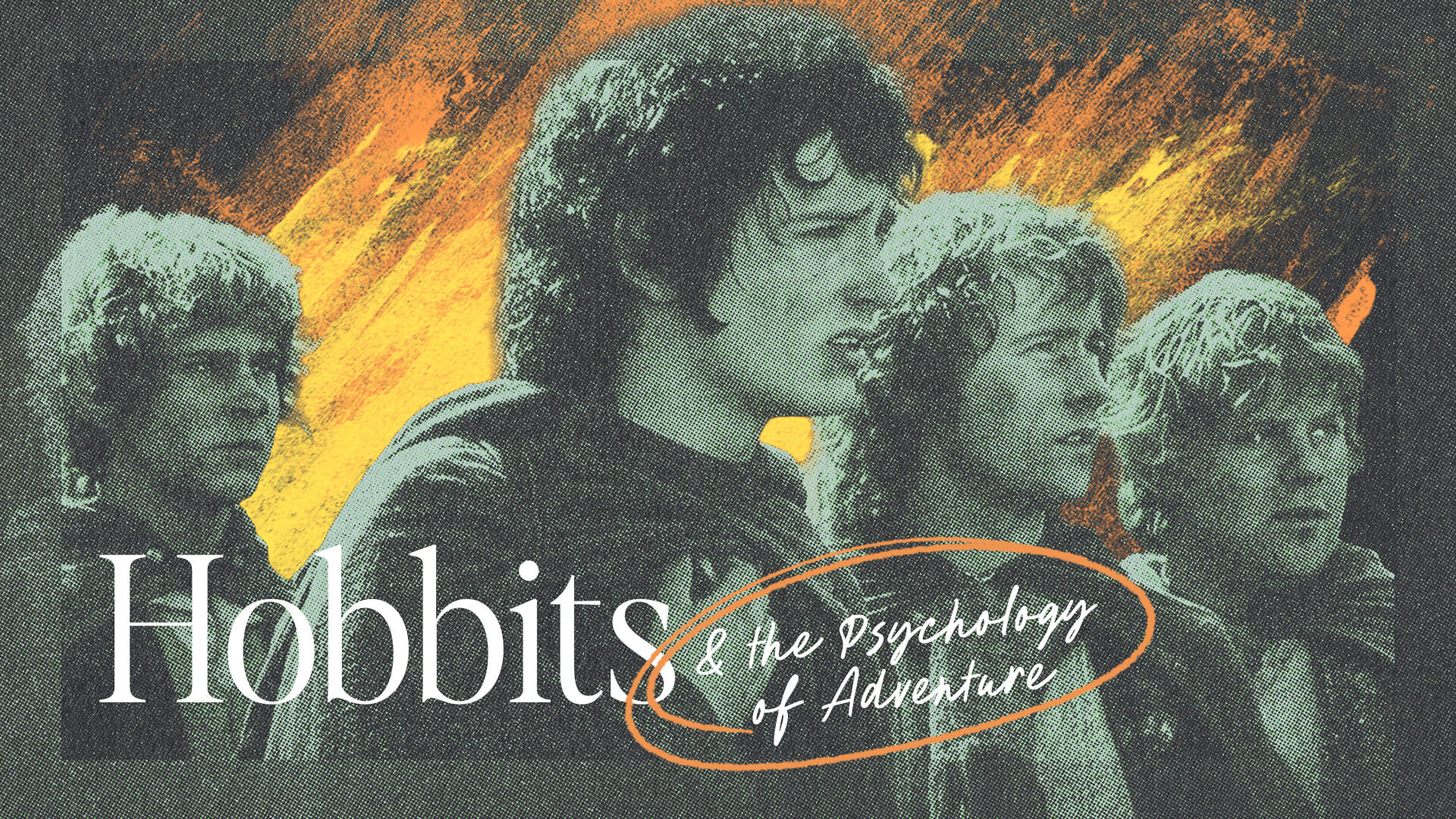
The Shire is a simple country. Tolkien meant it to be. Good soil, good beer, a postal service, and almost no history worth recording.
It tells us of something that the entire series is trying to protect. Something that we look back upon once we leave: home. And the four hobbits who leave it spend a year and a half walking, starving, and nearly dying in order to return to it.
Yet they return and find a gate across the road, blocking their path. There are new rules nailed to a board. And large men with sticks have taken the food, felled the trees, and turned the mill into something that fouls the water.
The war is over when this chapter begins, though the journey is not quite complete. The Ring is unmade, the king is crowned and wed, the hobbits have been honored before the armies of the West and sent home with an escort. The story has ended several times by now. Then the author gives us another section, and it is a shame that it was left on the cutting floor of the films.
Notice what Tolkien called the chapter: “The Scouring of the Shire.” There is a battle in it, at Bywater, and he did not name it for the battle. Scouring is a word for washing. Polishing. Cleaning.
Something in the Shire needed addressing, and those who had remained in it had no capacity to do so.
THAT IS WHAT YOU HAVE BEEN TRAINED FOR
At Bree, on the last leg of the road home, Gandalf tells the hobbits that he won’t be continuing on with them.
“I am not coming to the Shire. You must settle its affairs yourselves; that is what you have been trained for. Do you not yet understand? My time is over: it is no longer my task to set things to rights, nor to help folk to do so. And as for you, my dear friends, you will need no help. You are grown up now. Grown indeed very high; among the great you are, and I have no longer any fear at all for any of you.”
Then he turns off to go have a long talk with Tom Bombadil, and the hobbits ride the last stretch without him.
Tolkien seldom states his meaning outright. He distrusted allegory, which he said resides in the purposed domination of the author, and preferred applicability, which resides in the freedom of the reader. The only time one of the multitudinous morals of the story is explicitly named, it is spoken through a character in a way that closes the story arcs for specific characters. It’s their moral of the story, not ours. So he hands the meaning to Gandalf, lets him say it in a few sentences, and then takes the wizard off the road before anyone can ask a follow-up question. This moment is easy for the reader to ride past on the way to the fighting.
And so we learn that for the hobbits, their journey was not an interruption of their lives. It was preparation to address aspects of the lives they had left behind, because the trouble waiting at home had been sitting in the Shire the whole time. Lotho bought the country out from under his neighbors and nobody stopped him.
WHAT THEY CARRIED HOME
The road did not affect each of the hobbits in the same manner. Pippin was given something he did not have. Merry’s own nature was raised to a higher order. Sam had a verdict about him overturned. Frodo was lifted past the world the other three came home to. Each was met where he stood, and the transformation took the shape that the particular hobbit needed. What is consistent across the four is not the manner of the change. It is what the change was for.
Peregrin Took went out as the youngest, and for a long while as the one most likely to make things worse. He dropped a stone down a well in Moria and woke what was listening. He looked into the seeing stone and was questioned by the Enemy himself, the second time nearly causing disaster. He hid under the cloak of willful ignorance and justified his mischievousness by making himself small and seemingly unimportant.
Boromir had stood over him and Merry against a company of orcs and died there, for two hobbits who could do nothing for Gondor. And in this moment something changed. A few weeks later Pippin walks into the Steward’s hall and offers his sword to the dead man’s father:
“Then Pippin looked the old man in the eye, for pride stirred strangely within him, still stung by the scorn and suspicion in that cold voice. ‘Little service, no doubt, will so great a lord of Men think to find in a hobbit… yet such as it is, I will offer it, in payment of my debt.’”
In sacrificing his life, Boromir had given Pippin the gift of recognizing his own dignity. That he was worth dying for. And so the sense of that dignity was enough to mature the hobbit to the point of living as self-gift himself, as impetuous as it may have been. He was not a mere child. From here flowed his part in saving Faramir from his father’s funeral pyre. Released from service and told to go and die in what way seemed best to him, Pippin spent that freedom running for Gandalf while Beregond held the door. After Gandalf left the hobbits, he rallied the Took family and led a critical charge at the Battle of Bywater, and in time became Thain of the Shire. His curiosity was never satiated. It was matured by a sense of dignity gained through heroic acts.
Meriadoc Brandybuck left home as one who customarily made plans. He had mapped the conspiracy, packed the ponies, and known more about Frodo’s business than Frodo. Then he spent the war feeling as if he was a burden. Théoden left him behind. He rode anyway, carried in front of a woman who had been treated the same. And on the battlefield he put his blade behind the knee of the Lord of the Nazgûl. His arm went cold and strayed into darkness. None of his planning had mattered in that moment. He was moved by love to defend Éowyn, and the darkness changed him. In the Houses of Healing, Aragorn noted that in his recovery, Merry’s suffering would not darken his heart, but would teach him wisdom. And upon waking, the hobbit suddenly found himself changed, speaking of more than breakfast, ale, and pipeweed:
“It is best to love first what you are fitted to love, I suppose: you must start somewhere and have some roots, and the soil of the Shire is deep. Still there are things deeper and higher; and not a gaffer could tend his garden in what he calls peace but for them, whether he knows about them or not. I am glad that I know about them, a little. But I don’t know why I am talking like this.”
He does not love the Shire less. He has found out what it rests on. And the faculty he left home with is the one that saves the Shire. Back home it is Merry who reads the situation in an afternoon and sounds the horn Éowyn gave him, and the Shire awakens. The planner is still the planner. He is simply planning now for something he understands, as a knight of Rohan, commanding hobbits at the Battle of Bywater, and personally killing the ruffians’ leader.
In his newfound wisdom, Merry tells us how this works, and then says he does not know why he is talking like this. One must start somewhere and have some roots, and the soil of the Shire is deep. Grace does not pull a person up by the roots and plant him somewhere better. It goes down through the ground he is already standing in, and that ground turns out never to have been the bottom. Still there are things deeper and higher. The Shire he loved first is the Shire he came to love rightly, and nothing he loved had been taken away from him though he came to see its proper place.
Samwise Gamgee was raised by a father who loved him, but who expressed that love in a misguided way: through attempts to control his son, protecting him from being hurt by criticizing him preemptively. And Sam internalized his father’s voice and was exceptionally hard on himself. The hobbit was told where he belonged. “Elves and Dragons! Cabbages and potatoes are better for me and you. Don’t go getting mixed up in the business of your betters, or you’ll land in trouble too big for you.”
Adventure is not a compliment in the Shire. It is what happened to Bilbo, and what a sensible hobbit takes care never to have. Despite this verdict, Sam left and got mixed up in the business of his betters out of love for his friends. He stood in front of Galadriel. He carried the Ring and handed it back. He carried Frodo up the cliffs of Mount Doom. He came home to a ruined Bagshot Row and a felled Party Tree. And his resultant righteous anger fueled him to help recapture his home at the Battle of Bywater.
And then he waited for no one’s permission to rebuild it. He opened Galadriel’s box and spent a year putting the Shire back into the ground. The gardener came home a gardener. And the hobbits who would once have agreed with his father about the business of one’s betters elected him Mayor. Seven times. Criticism had become widespread affirmation and approval.
All three saw a maturing of who they were. The narratives of being problematic, a burden, or less than did not shift as a result of being told something new. They shifted through an interior change that came by way of a new experience. Each was able to exercise virtue according to his own dignity. And such prepared them for what was to come.
And it did not stop at the Shire. Pippin became Thain, Merry the Master of Buckland, Sam the Mayor. Each was called forward again, into an office the hobbit who left home could not have held. The Scouring was not the destination. It was the next thing they had been made ready for.
WHO WENT WITH THEM
Each of those changes arrived as a person. Boromir’s body between Pippin and the arrows. Théoden treating Merry as a son, and Éowyn carrying him to a field he had been forbidden. Galadriel looking at a gardener and honoring what he loved, and Frodo needing him past the point where what was given by Sam was complete self-donation. Not one of these hobbits corrected himself. Each was handed an experience of being valued by someone whose judgment he had no way to dismiss. This is the corrective emotional experience that we cannot give to ourselves.
Gandalf is the fifth, and his gift is the one hardest to recognize as a gift. He has been in this story since Bag End, and he rides the last long road home with them, and at the borders of the Shire he stops. He is not abandoning them. He is declining to do for them the one thing they have been made able to do. This is what a mentor is for, and it is what accompaniment actually means. He comes on the adventure. He stays through the fear and the failures and the long stretches when nothing appears to be happening. And then he steps back at the threshold, so that whatever was found on the road can be carried home and spent there. He gives his last hour to telling them why, and then he leaves them to it, with no fear at all for any of them.
THE ONE WHO CAME BACK DIFFERENT
Frodo does not draw his sword at Bywater. His work that day is to keep his own people from killing enemies who have thrown down their weapons, and he forbids the killing of hobbits outright, even the ones who betrayed the Shire. This is a beautiful extension of that deep virtue of mercy that stayed his hand from killing Gollum. Only, it had been sublimated to a higher order.
Then Saruman, ruined and reduced to a beggar in the lane in front of Bag End, pulls a knife and stabs him. The blade turns on the mail shirt under his coat. Sam has his sword out. Frodo stops him. “Do not kill him even now. For he has not hurt me.” He lets the wizard go, and in response, Saruman says this:
“You have grown, Halfling. Yes, you have grown very much. You are wise, and cruel. You have robbed my revenge of sweetness, and now I must go hence in bitterness, in debt to your mercy.”
The wizard who held Gandalf prisoner on the top of Orthanc is settled in a few quiet sentences by a hobbit carrying no weapon, and Frodo never raises his voice. He is no longer competing for anything Saruman has. His gaze has lifted to higher things. To the transcendentals: Goodness, Truth, Beauty.
He knows what saved Middle-earth. He had carried the thing to the one place it could be unmade, and at the last step he failed and claimed it for himself. What finished the work was Gollum, and the mercy toward Gollum that Bilbo began and Frodo also extended. A man who has watched providence operate that plainly, beginning with his act of mercy but tracing it through his own failure, has little concern for a ruined wizard in a lane.
It also means the Shire can no longer hold him. “I tried to save the Shire, and it has been saved, but not for me.” Merry found that the Shire rests on things deeper and higher, and came home able to defend it. Frodo’s raising went further. He was lifted past the point where the Shire could hold him at all. The other three had been made ready for their lives. Frodo had been made ready for what comes after them.
And in the end the other three followed him out. Merry and Pippin grew old in their offices, and then, in their last years, handed their goods and offices to their sons, rode over the Sarn Ford, and were not seen in the Shire again. Merry reached Edoras in time to be with Éomer before he died that autumn. The two of them went on to Gondor and spent what short years were left to them there, and they were laid in Rath Dínen among the great of Gondor. It is the same street of tombs where Pippin had once run for Gandalf to keep a father from burning his son.
Sam’s ending is stranger. Rose died, and on the twenty-second of September he rode out from Bag End, came to the Tower Hills, and gave his daughter Elanor the Red Book, in which he, Bilbo, and Frodo had chronicled their story. The tradition her family kept is that he passed the Towers, went down to the Grey Havens, and went over the Sea, the last of the Ring-bearers. He had carried it, and so he was allowed to follow his master.
WHAT THE ROAD WAS FOR
Each of us is handed a Shire. A life of a particular size, with particular people in it, and some particular difficulty we have never once been able to face down. And to be clear, the real difficulty is not external to us. It is our relationship to the difficulty that is carried across contexts. Every trial passes, and still we want God to come and rescue us from the challenges we face.
God does not deal with any two of us the same way. He meets us where we are, which is why the change rarely arrives in the form we expected, and rarely in the form we would have chosen. What is consistent is the purpose. We are called forth, and then called forth again, and each thing we are brought through is preparation for what we have not yet been asked to do.
So much of the spiritual life is preparatory. The prayer that seems unanswered, the sacraments received on ordinary mornings, the dark stretches none of us would have chosen, nor could make sense of at the time. And yet when we look back upon those times, we can catch a glimpse of God’s presence and how He was preparing us for what is to come.
We are growing, stretching, so that we can continue to carry out what God has tasked us with, whether that be finally addressing the challenges that formerly weighed us down, or enduring a new and difficult trial. And this process is never done alone. It necessarily begins with love received and ends with love gifted. Every hobbit in that story was formed by someone who loved him, and each of them was handing on what they had received, all the way back to the source of it.
Tolkien wrote one more thing about that harbour, years after the book was finished, and never published it. He gave the poem away to his secretary as a gift, and it surfaced only after he died. It is Bilbo’s, spoken at the quayside: “Day is ended, dim my eyes, but journey long before me lies.” The eyes are failing. The road is not.
Bilbo and Frodo share the twenty-second of September. It is the day Bilbo walked out of Bag End, and the day Frodo came of age and into what Bilbo had been carrying. At the end of everything, it is the day Sam rode out. In the book it is a birthday that turns into a departure.
The road out was the only way home.