

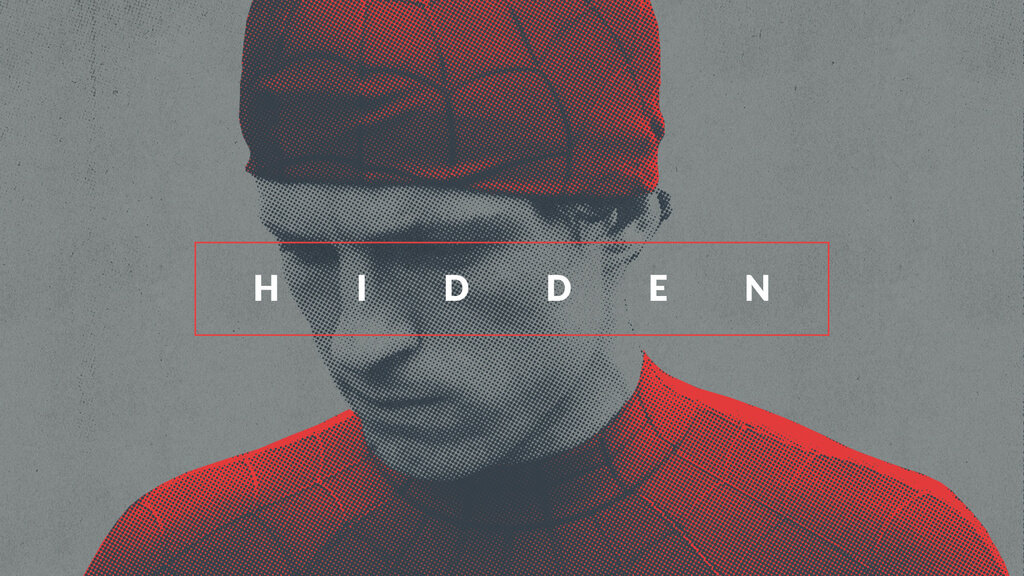
Spider-Man has been rebooted three times in a single generation.
New actors, new timelines, new universes, and now, with Brand New Day, a new beginning that is not truly a beginning. By every rule of audience fatigue we should be finished with this character. And yet we keep coming back to him, generation after generation, and it is worth asking why.
It’s not the powers. Other heroes are stronger, richer, more invulnerable. It’s not the spectacle. Every franchise has spectacle now. The draw is something quieter: a young man secretly carrying a weight he never asked for, while the city he saves has so often called him a menace on the front page.
That image of the hero reading his own bad press is the oldest image in Spider-Man’s story. And it is where we ourselves often live.
THE HIDDEN HERO
Spider-Man is a small-time hero. He is not defending the galaxy. He is pulling strangers out of burning buildings and stopping muggings on streets no one important ever visits. He does not seek glory, but instead he accepts its opposite. J. Jonah Jameson built a media empire on the claim that Spider-Man is a public danger, and for years Peter Parker delivered the photographs himself. He is willing to be maligned, criticized, and persecuted for the sake of the good.
This is the core of the character, and it is the reason he resonates across generations. Every person knows what it is to love without recognition. The parent whose daily sacrifices are absorbed without a word of thanks. The friend who quietly holds another’s crisis together and is forgotten when the crisis passes. The employee who does the right thing at cost and watches someone else take the credit. No headline runs for any of it.
We are drawn to Spider-Man because we wrestle with him about how much of our sacrifice to reveal. He makes visible a truth we may carry privately: that often real love is hidden, and hiddenness is part of what makes it love. The sacrifice that is seen collects its reward on the spot. For those of us who look for recognition, the sacrifice no one sees is the purer gift in a given moment. But how sustainable is this? How human is it? What of those of us who keep our love hidden out of fear that we won’t be loved in return?
THE RESET
This wrestling is why the franchise made the choice it did. Brand New Day returns Peter Parker to a lonelier, younger state. MJ is gone from his life. Ned is gone. The friends who once shared the secret of his identity no longer carry it with him, and the story is deliberate about the loss.
On the surface this looks like cruelty to a beloved character. We might expect the opposite arc: Peter grows up, marries MJ, settles into a life where the mask is just a job. The comics tried that version. Audiences have never wanted it. We are not interested in the older Peter Parker with the mortgage and the resolved love story. We are interested in the struggle, the younger Peter, the one still deciding who he will become inside the awkwardness of an unfinished life.
The reset is not a gimmick. It is a recognition of what the character is for. When Peter had people who knew his secret, the central tension slackened. Someone saw the sacrifice. Someone knew what the bruises cost and what the lateness meant, and the loneliness at the core of the character was quietly resolved offscreen. The hiddenness that defines him was half undone. To find him again, the story had to make him alone again.
But loneliness in this film is not only a plot device. It is a portrait, and the portrait is of us.
PROTECTING THEM FROM US
Peter’s isolation is where this film does its deepest work, and what he slowly learns about it is the heart of the story.
Peter’s stated reason for hiddenness has always been protection. He cannot tell MJ who he is or let her close, because the people who love Spider-Man become targets. He guards them by withholding himself. The logic is airtight, and it is noble, and the film begins to show us what it costs.
Because here is what happens in a person, underneath the noble logic: we often protect ourselves from others by protecting them from us. We keep them out. We block them from knowing our true interior experience. Not only our wounds and our shame, but the good we do, how much we care, the vulnerability we are half-ready to show and then swallow at the last moment. The stated reason is their safety, or their comfort, or not wanting to burden them. The functional result is that no one ever gets in.
I have sat with many people who live exactly this way. Generous, responsible, quietly heroic in their daily lives, and unknown to the people closest to them. The withholding feels like strength, even like service, but over time it becomes a sealed room, and the person inside it begins to suffocate on their own virtue, wondering why a life spent giving has left them so alone.
This is the arc Brand New Day gives Peter. We find him coming out of himself, recognizing that he needs others, and something harder to accept: that they want to be let in. They want to be part of his life precisely so they can suffer with him. That phrase deserves attention, because it is the literal meaning of compassion. To suffer with. What his friends are asking of Peter is not information. It is communion.
There is something else the film understands. Peter fears the parts of himself that could evolve into something new, something beyond the closed-off, hidden self-sacrifice he has built his identity on. Responsibility came with great power; he has known that since the beginning. What he has not known is that openness takes more courage than the mask ever did. We spend our whole lives trying to crawl back out of the walls we have built. Peter simply does it upside down.
COMPASSION FOR THE WOUNDED
The irony of Spider-Man’s hiddenness is that he sees beyond the masks of his foes, down into their core, and through compassion finds goodness.
Look at his villains. Nearly all of them are misguided rather than monstrous. They use their powers for evil or for self-service, and sometimes for reasons that began as noble ones. Some act out of love, out of grief, out of desperation to save someone. They do bad things for good reasons, and the moral tradition is clear about what that produces: a good intention does not redeem an evil act. The act remains evil. The film does not soften this, and neither should we.
But watch what Spider-Man does with that truth. He does not lead with judgment. He leads with compassion. He arrests his foes in hope of rehabilitation. He looks at the enemy in front of him and insists on seeing the residual good, the person underneath the wound. In this story, that person is Jean Grey, a character we know from the X-Men. She perfectly reflects the pattern: her power has become dangerous due to woundedness, though she is still worth reaching, and so he allows her into his mind. When she hunts for a weakness, what she finds is a memory of May, who knew everything and loved him anyway. He does not defeat her by hiding. He defeats her by being seen.
Oftentimes we do bad things because we are wounded. Spider-Man understands this because this was a part of his origin story. He allowed the man who would later kill his Uncle Ben to escape out of pride and resentment. And so he needed to have compassion for himself, which then became compassion for others.
Notice the symmetry the film builds. The hero who finally allows others to suffer with him is the same hero who has spent his whole life suffering with everyone else, including the people trying to kill him. Compassion received and compassion given turn out to be one movement. The same pattern, at every scale of the story.
THE ARCHETYPE
So we can now say plainly what the sum of this character is and why he endures when so many heroes fade.
Spider-Man is a Christ archetype. The hiddenness of his goodness. The service that comes with power, freely accepted rather than resented. The willingness to be maligned and persecuted for the sake of what is good. The compassion that sees the wounds inside the enemy and reaches for him anyway. The virtue that asks for no recognition and receives none. None of this is accidental resonance. It is a pattern offered to us in the fullness of time, long before Peter Parker donned a red mask.
Consider the true depth of God’s hiddenness. This is a marvel we spend too little time reflecting upon: God, in His infinite power, makes Himself so small. In Christ’s thirty-three years on earth, thirty were spent in obscurity: a child born into poverty who became a carpenter in Nazareth, a town no one important ever visited. When He healed, He often told the healed to tell no one. When He taught about sacrifice, He taught secrecy outright: give in secret, pray in secret, and the Father who sees in secret will repay you. The hiddenness we wrestle with, the hiddenness Peter Parker builds a life inside, was not an accident of Christ’s circumstances. He chose it.
And then, on the night before He died, the hidden God asked for company. He took three friends aside in Gethsemane and asked them to stay awake with Him, to watch and to suffer with Him. The one who had spent every hidden year suffering with others asked to be accompanied in His own agony. His friends fell asleep and the sacrifice went forward unseen by those He had chosen, though fully witnessed by the Father. Both of Peter’s lessons are here in a single night: that love does not depend upon being seen by others, and that love invites others in.
And the pattern does not only attract us. All of us are called to live conformed to Christ in the same fashion: to do the good that no one sees, to bear the misunderstanding that sometimes comes with it, to let others into our suffering instead of guarding them from it, and to look at the people who hurt us long enough to find the wound underneath.
The Bugle never prints the truth about Spider-Man. It doesn’t need to. Hidden is not the same as unseen.