

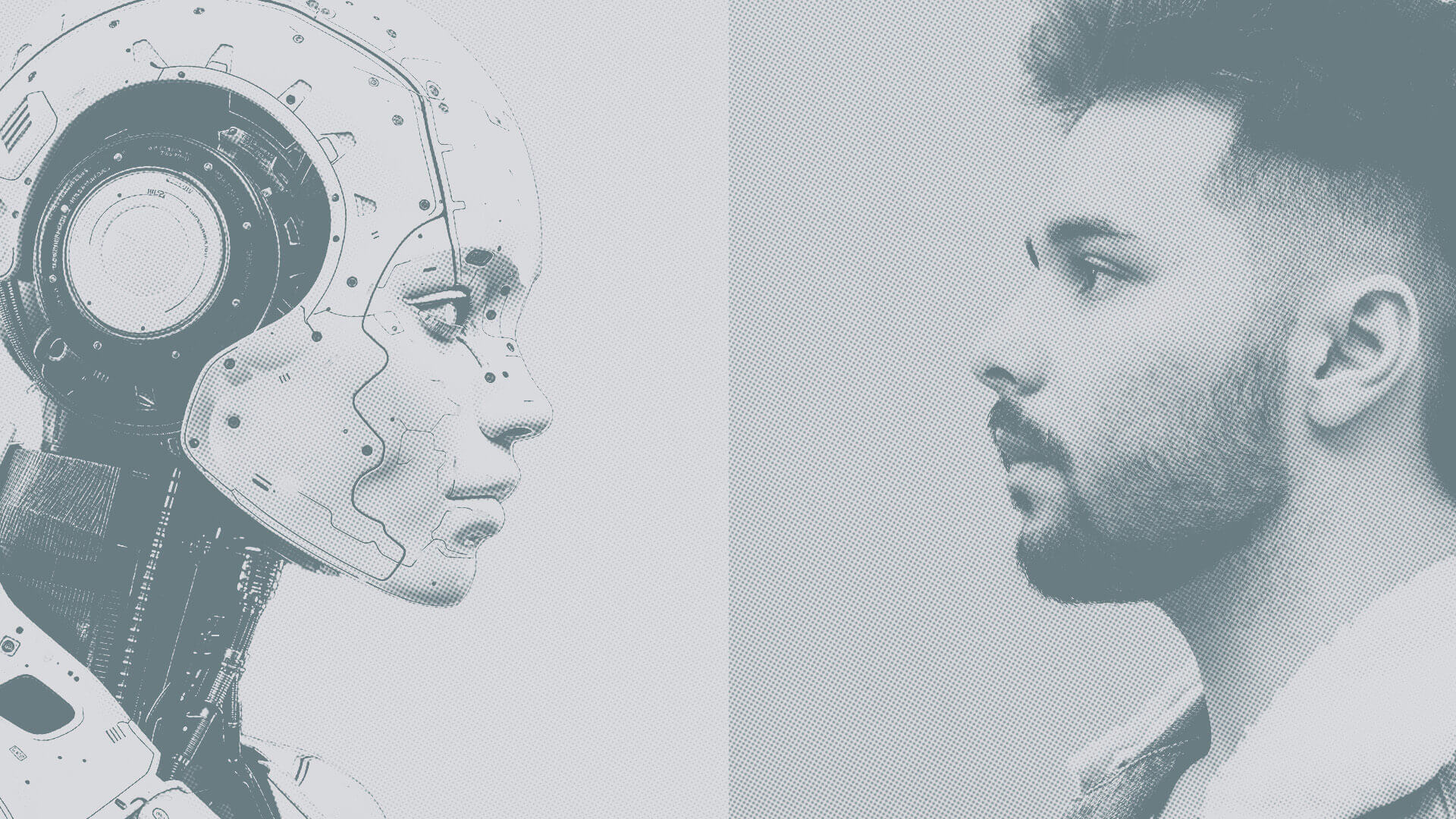
Let me start with something surprising: AI therapy works.
We’re now seeing clinical outcomes from AI-driven counseling tools that are comparable to—and sometimes even better than—traditional therapy.
That’s not science fiction. That’s current reality.
Whether it’s cognitive behavioral therapy (CBT), internal family systems (IFS), or other structured modalities, AI systems can consistently apply therapeutic techniques, track progress, and deliver emotionally responsive interventions. It’s impressive. And in some cases, it’s even beautiful.
But the real question isn’t can AI help people. It’s what kind of help is it offering? And more importantly: what’s missing?
What AI Does Well
To be clear, I’m not a Luddite. I’ve used AI in my own ministry and practice.
In fact, I recently translated my entire Catholic Mindfulness Virtual Retreat into Spanish—flawlessly—using AI video dubbing. Dozens of hours of content, voiced in perfect Spanish with my tone and gestures intact, now available to serve an entirely new population of people looking for healing.
This is real, practical fruit.
And when it comes to therapy, AI can:
- Deliver consistent CBT protocols with zero fatigue or distraction
- Ask tailored, thoughtful questions that mimic the IFS approach
- Map out your internal “parts” based on your chat history and language patterns
- Provide emotional support at any hour of the day
It’s not just functional—it’s effective.
What AI Will Never Give You
But here’s the key: AI doesn’t love you.
It doesn’t suffer with you. It doesn’t have a body. It doesn’t walk with you into the mess, sit with you in the silence, or grow with you through relationship.
And because it doesn’t suffer with you, it can’t heal you.
Real healing is about more than insight. It’s about transformation. And transformation is forged in the crucible of relationship and suffering—when we stay, when we listen, when we learn to give and receive love even in discomfort.
As I’ve said elsewhere: “What we actually need to grow is imperfection. What we need is suffering. And that’s the one thing AI can’t offer us.”
Three Guidelines for Using AI Therapy as a Catholic
So what do we do? We don’t have to reject AI outright—but we do need to use it wisely. Here are three principles to help:
1. Use It as a Tool, Not a Replacement
AI can assist your healing journey, but it can’t replace real human relationship. Use it to journal, track patterns, or gain insight—but don’t let it take the place of accompaniment.
2. Stay Grounded in Communion
Community is not communion. A chatbot can simulate empathy, but only a real person can give you the gift of presence. Make sure you’re still engaging with family, mentors, spiritual directors, and therapists who know you and love you.
3. Check Your Intentions
Ask yourself: Am I using this to avoid discomfort or to support growth? If AI is helping you face difficult truths and become more loving, that’s great. If it’s helping you bypass the hard work of healing, that’s dangerous.
Healing Isn’t About the Outcome—It’s About the Work
Imagine this: You and your spouse have a conflict. You each go to ChatGPT for help. It gives you perfect insight, helps you understand each other’s perspectives, and maps out a solution. You both return to the conversation, apologize, agree on a plan… and move on.
Sounds efficient, right?
But here’s the problem: You missed the moment where real healing happens.
The healing isn’t the insight. It’s in the struggle. In the misunderstanding. In the effort to listen, stay calm, stay present, and grow in virtue. It’s the work of love—not just the outcome—that changes us.
And that’s what AI will always lack. It can show you the path, but it can’t walk it for you.
Conclusion: Healing Requires Communion, Not Just Information
AI is here. It’s powerful. And in many cases, it’s genuinely helpful. But it can never offer what the human person ultimately needs: to be seen, loved, and transformed through real relationship.
Use the tools. But never stop doing the work.Because healing isn’t about escaping the mess.
It’s about finding Christ in the mess—and letting Him make you new.