

The psychology of desire is complicated.
It can be that emotion that drives us toward the most noble of human experiences. And yet it can also arrive uninvited. It can run amiss. Desire doesn’t always align with the person we are trying to become or honor our commitments. And it is often coupled with shame to such an extent that we would never name it in the company of those who respect us. Many of us have settled on the same strategy for dealing with it: don’t look.
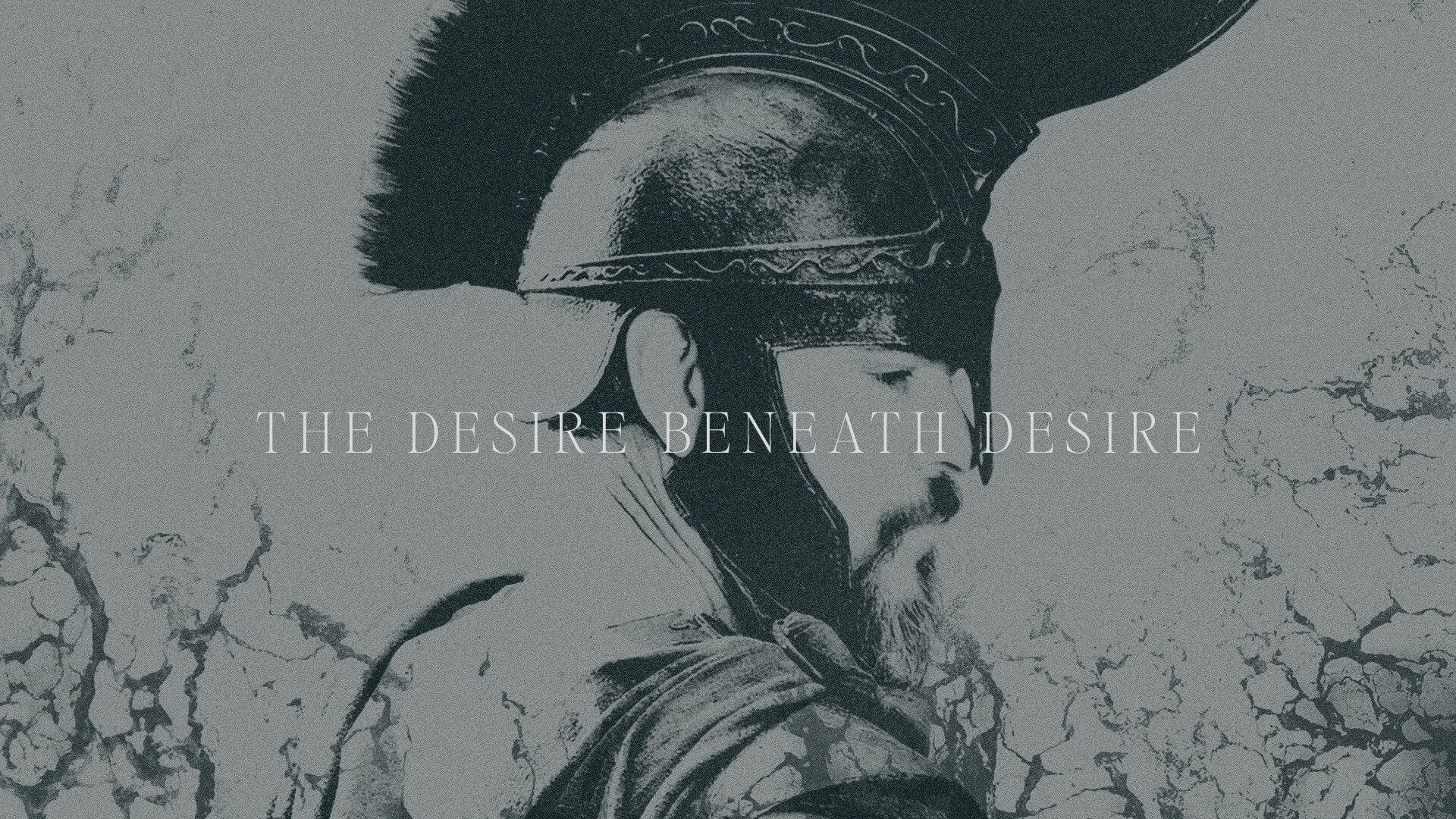
Christopher Nolan’s The Odyssey contains a scene about a man who is forced to look.
WHAT NOLAN CHANGED
The doorway into the deepest room in the film comes through his treatment of the Sirens. In Homer, the Sirens are a hazard of the sea. Their song is so beautiful that sailors steer into the rocks to draw closer to it. The temptation is pleasure, and the solution is distance: wax in the ears, hands on the oars, keep rowing.
Nolan keeps the wax and the ropes. He changes the song.
His Sirens do not offer mere pleasure. Pleasure is the object of only one desire; instead they offer a vision into the depths of all the desires of Odysseus. Riches, power, glory, revenge, escape, and pleasure too. Whatever a man wants, the song sings it back to him. And this reveals deeper layers of his psyche. Their song speaks to his grief, his guilt, his longing for home. It does not sound monstrous. It allures with compassion, before that allure turns to pain.
The horror is not hearing what you want. The horror is hearing the truth about what you have wanted.
TIED TO THE MAST
Notice the position Odysseus occupies. His crew cannot hear the song at all; their ears are stopped with wax. He hears everything and can do nothing about it, because he ordered his men to bind him to the mast before the singing began. He begs to be released. They row on.
This puts him in a state that almost no one enters voluntarily. He sees his desires exactly as they are, in full force, and he cannot act on a single one of them.
There is a parallel here with the most challenging aspects of clinical work. I have great respect for those clients who are willing to do for themselves what Odysseus needed to be tied up in order to accomplish: to look upon the darker parts of ourselves.
Most of the time we do not see our desires; we are swept up in them. Parts of us drive toward certain goals, certain behaviors, certain people, and we are so blended with those parts that the wanting feels indistinguishable from the person doing the wanting. The work of growth begins when a person can step back far enough to watch the desire move without being moved by it. And anyone who has done this work knows what Odysseus discovers at the mast: seeing yourself clearly is painful. Often it is the pain we have spent years avoiding.
THE THREE MOVEMENTS
Nolan builds the encounter as a progression that reveals different layers of the psyche.
The first movement is pleasure. The song shows Odysseus what he desires, and the film lets us watch delight cross his face. There is real joy in it. To have your longings named, to hear them sung back with perfect understanding, is intoxicating. Every person who has ever felt deeply known knows this feeling.
Then it turns. The song keeps going, past the desires he can admit to, into the ones he cannot. The ambitions that shame him. The resentments. The cravings that conflict with what he believes about himself. The pleasure on his face gives way to suffering, because the song is no longer telling him what he wants. It is telling him what he has wanted, all of it, including the wanting that parts of him reject and would never confess.
And then the third movement, the one that breaks him. When every layer has been stripped away, what remains at the bottom is not a dark secret. It is the simplest thing imaginable: his home, his wife, his family, the man he was before the war. The Sirens do not show him something new. They show him something he already had, and lost.
REVELATION AND MERCY
Here is where the scene deserves more than what Nolan gives it, and where a true anthropology can complete what the film begins.
A person, being created good, pursues the good by nature. We do not desire evil as evil; no one does. The disorder enters in how we pursue. We take a created good, something genuinely worth wanting, and we pursue it as if it were the Good itself. As if it were God.
Food is a good; the taste and pleasure of it are gifts. Overeating as if food could satisfy the deep longing for pleasure itself is where the disorder begins. The desire for safety and security is good, and yet it can become the desire for power at other people’s expense when hardened and inflamed. Trace any disordered desire far enough down and you find a good thing being pursued poorly.
This changes what we do at the second movement, the movement of shame. The shame is not wrong to appear; it registers a real disorder. But shame draws exactly the wrong conclusion. It says: these desires speak to something rotten at the core of you.
The revelation of the deeper good is the foundation for mercy. Go deep enough beneath any desire we are ashamed of and we find something good that a part of us has been reaching for in the wrong place. The part has been misguided, often due to a lack of formation. That part does not need to be exiled. It needs to be understood, and then reordered toward the thing it was actually seeking.
This is why the encounter with our own desires, the very thing the Sirens weaponize, can become a source of compassion rather than condemnation. Not sentiment. Anthropology. We are good, made good, and even our most crooked wanting is bent-good rather than pure evil. The wound is in the ordering, not the being. God created us good, in his image and likeness.
LIMITS OF THE MYTH
We find here the limits of a myth without the Gospel.
Follow Nolan’s progression to its end and see where Odysseus lands. The song has revealed what he truly wanted all along, and the deeper revelation is unbearable for one reason: he had it, and it is gone. The innocence is forfeited. The years spent. The man he was before Troy is not waiting in Ithaca.
Without anything more, radical self-knowledge terminates in self-shaming, which then ripens into despair. That is the honest endpoint of the pagan frame that has yet to be introduced to a compassionate God. Nolan does not flinch from naming this experience.
The Christian claim is that this is not the true endpoint. The revelation of deeper aspects of the person is a step along a journey. All the great saints would be the first to acknowledge their sinfulness. But what is revealed is not truly lost. Instead, we can come to possess what we truly long for beneath the disordered twisting of desire: the love that satisfies is not behind us. It’s offered to us now.
There is forgiveness for the pursuing gone wrong, and there is possession, real possession, of the Good that every lesser desire was reaching toward. God has given Himself to us. Every good desire finds its source there, and every shamed desire finds its healing there.
Odysseus needed the ropes because the song, heard alone, would have destroyed him. That much has not changed; self-knowledge without accompaniment is dangerous, and anyone who has sat with a person in the early stages of seeing themselves clearly knows it. But we do not hear the song alone, and we are not tied to the mast waiting for it to end. The truth about what we have wanted, all of it, has already been heard by Someone who responds with mercy.
The song is never the danger. Hearing it without love is.