

For a long time, Jesus’ mother meant nothing to me
I knew Mary was important—she had a statue in the church, she was in the prayers—but she wasn’t for me. I grew up Catholic, but Mary wasn’t emphasized much in my formal formation. I never disliked her, but I never understood why she mattered personally. I remember sitting in Mass one day, looking at that white marble statue of her—so serene, so beautiful, so perfect—and immediately being flooded with every way I felt I wasn’t.
It was easier not to think about her. Because to think about her made me feel worse about myself.
As I got older, I began dating a faithful Protestant guy for awhile. We’d debate the usual theological topics—Eucharist, baptism, purgatory—but never Mary. I had no opinion, no framework, no confidence in her place. I avoided the topic entirely.
But that relationship, as it unfolded, ignited a deep hunger in me. I wanted to know the truth—not just to win debates (though I certainly wanted to), but because I needed something to ground me. I threw myself into theology, eventually going to Franciscan University and soaking in everything I could. I studied under giants—Fr. Dan Patee, Dr. Scott Hahn, Dr. John Bergsma—and even took a Mariology course under Dr. Mark Miravalle.
Still, I didn’t really know Mary.
I knew things about her. I could defend her role with footnotes and Marian dogmas. But my heart stayed untouched. My faith, in many ways, was still a strategy—knowledge was armor, and I wore it hoping it could protect me from pain, from loss, from powerlessness.
That strategy worked for a while. But not enough to convert.
But then I met my now husband. A great man with a strong Catholic faith. We got married. And then I became a mother.
And that’s when everything changed.
1. Mary’s Heart Meets Us in Our Vulnerability
Pregnancy undid me. The fears, the what-ifs, the powerlessness—it was more than I could manage. And in that stripped-down place, Mary broke through.
Not through a lecture or a teaching or a dogma—but through presence. Through the quiet, subtle, maternal way she began to show me I wasn’t alone.
When I was diagnosed with gestational diabetes during my first pregnancy, fear took hold. No theological degree could shield me from the vulnerability of carrying life I couldn’t control. And in that space, my husband—who had long had a quiet devotion to Mary—invited me into the Fourth Joyful Mystery: the Presentation in the Temple.
“Offer the child to the Father,” he said.
“Like Mary did.”
And for the first time, I understood: Mary doesn’t take us away from our fear. She teaches us how to walk through it—with trust.
2. Her Immaculate Heart Is a Model of Interior Freedom
Mary’s heart is immaculate not because she was spared suffering—but because she was radically free to say yes, even under the Cross.
That freedom isn’t perfectionism. It’s surrender. It’s interior spaciousness. It’s the refusal to be ruled by fear or control.
When I was faced with the real risk of loss, my knowledge meant nothing. But Mary’s example—her ability to ponder, to receive, to trust—began to form something new in me. Not the illusion of control, but the possibility of peace.
3. She Suffers With Us—and With Christ
St. John Paul II once wrote:
“A sword pierced the heart of the Virgin… her maternal heart was tested by the obedience of faith.”
(Redemptoris Mater, 1987)
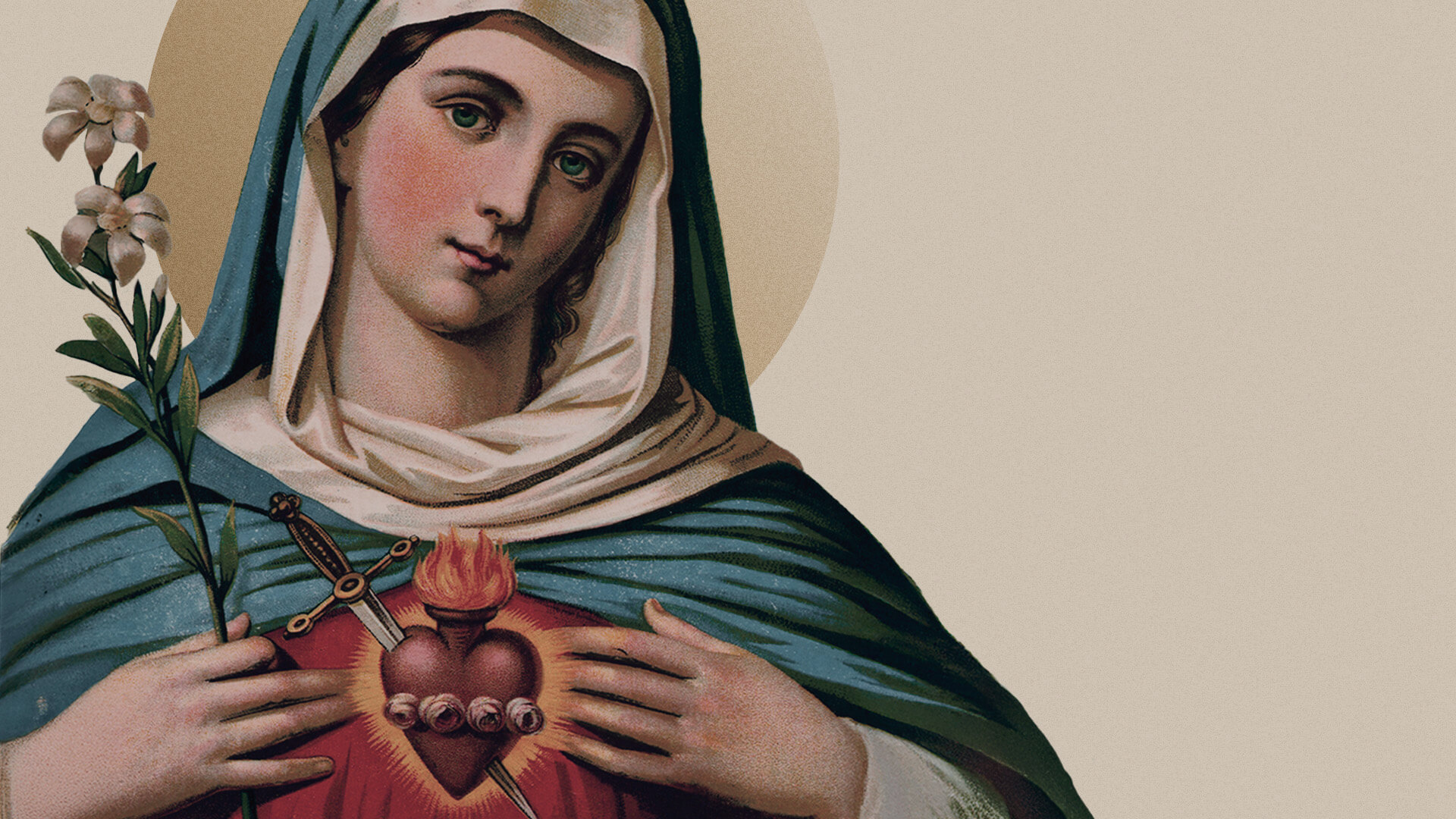
Mary’s Immaculate Heart teaches us that suffering isn’t a detour in the spiritual life—it’s the place where Christ is found. Her heart was pierced not once, but repeatedly. And yet she kept saying yes.
She was never numb or stoic. She felt everything. But she stayed. She trusted. She mothered in the middle of pain.
That’s the kind of motherhood I needed. That’s the kind of mother I wanted to become.
4. She Is the Safest Path to Jesus
John Paul II’s motto—Totus Tuus, “Totally Yours”—once felt foreign to me. Now, I understand it not as a theological abstraction, but a lived reality.
When I gave my baby to the Father, as Mary once did, I didn’t feel powerful. I felt held.
Mary didn’t replace Jesus—she pointed me to Him, walked with me toward Him, mothered me so I could be free to follow Him more deeply.
Her heart is not a detour. It’s the way.
5. Her Heart Is Still Forming Mine
Even now, years later, I find myself falling into old patterns. Wanting to know more so I can fix, prove, control. But Mary draws me back.
She reminds me that surrender is not passivity—it is freedom. That trust is not naïve—it is holy. That to mother well is not to protect from all pain—but to hold space for love, even in the midst of it.
Her Immaculate Heart is not just a symbol of purity.
It is a school of healing. A refuge for the broken. A formation ground for the saints.
What the Immaculate Heart of Mary Teaches Us: Practical Takeaways
If you find yourself where I once was—overwhelmed, unsure how Mary fits into your life, or simply longing for deeper peace—here are five lessons her Immaculate Heart offers us:
1. Pause and Ponder
Life doesn’t have to be immediately solved. Like Mary, create interior space to hold, not just handle.
Interior freedom begins with silence and spaciousness.
2. Surrender What You Can’t Control
Follow Mary’s example in the Presentation: offer your fears to the Father.
You are not in control—and that’s where peace begins.
3. Stay Present in the Suffering
Like Mary at the Cross, don’t numb or flee. Stay. Feel. Love.
Christ is found not beyond the Cross, but within it.
4. Let Mary Mother You
You weren’t meant to walk alone. Ask for her help.
Her tenderness is for you. Right now. As you are.
5. Entrust Your Story to God
You don’t have to understand every chapter. Mary didn’t either.
Freedom comes not from certainty, but from trust.
Trust her.
She will lead you to Jesus.
And you will not walk alone.
Immaculate Heart of Mary, make my heart more like yours—open, free, trusting, and full of love.
-Amen.