
How a pre-modern biology lesson slipped into our theology and how John Paul II shows us the way forward.
The Problem of Limited Data
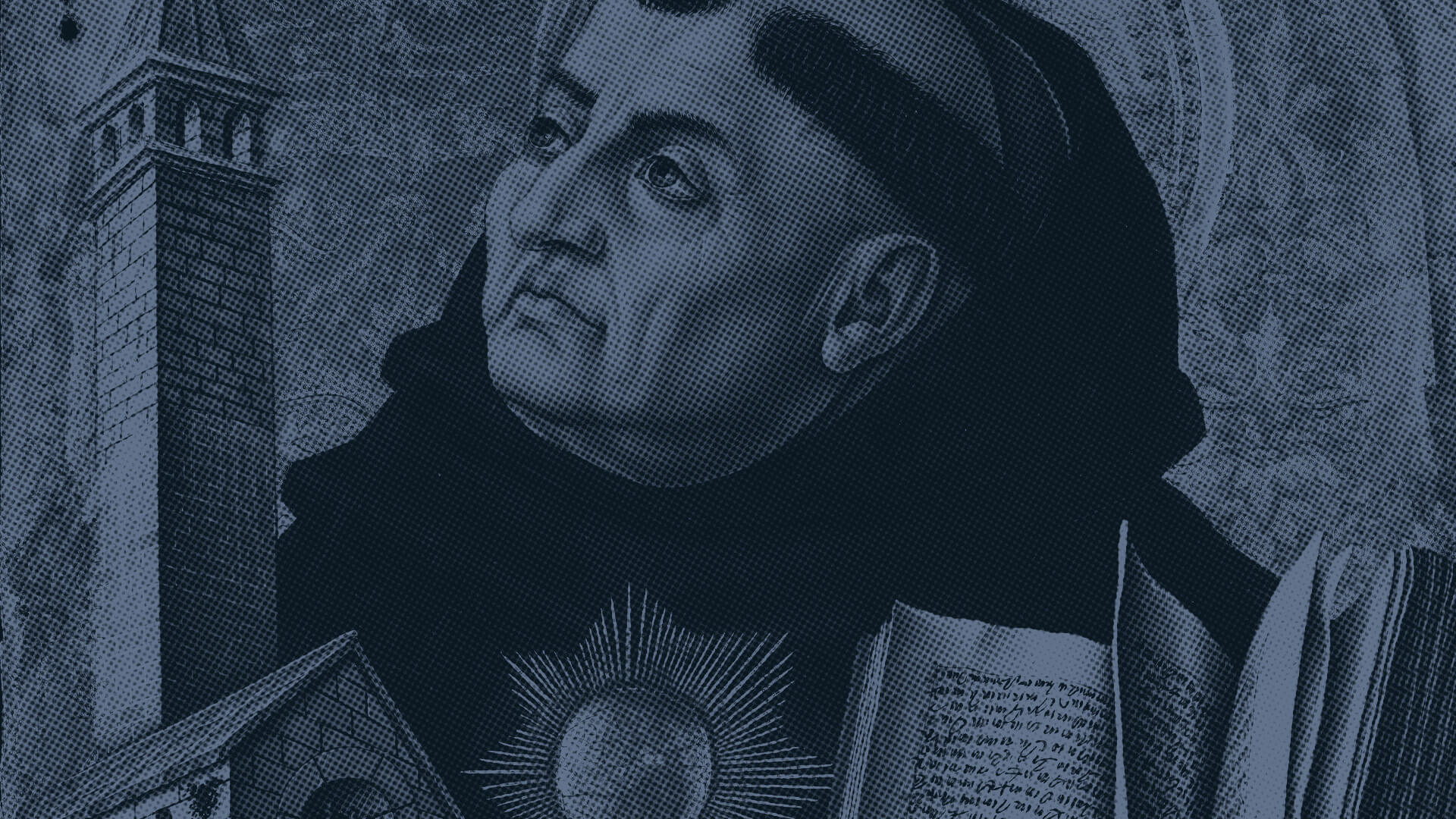
St. Thomas Aquinas is a towering saint, doctor of the Church, unmatched synthesizer of faith and reason who built parts of his anthropology on Aristotle’s biology. That biology said the male “seed” contains the whole human, while the woman is essentially fertile soil. From that premise, Aquinas could write (following Aristotle) that woman is “defective and misbegotten” as an individual compared to man.
That single, pre-scientific premise was not malice; it was limited data. But when a flawed premise undergirds formation, it echoes: in seminary culture, in marriage expectations, in parish life, even in how we read Scripture. And the echo still hurts people.
This is not about canceling Aquinas. It’s about developing what is true by correcting what was never theological in the first place—his inherited biology.
What changed (and why it matters)
Biology changed. We learned that human life begins with two equal gametes—23 chromosomes from the father, 23 from the mother—cooperating to form one new human person. The “seed/soil” model is false. If the natural philosophy is corrected, any theological conclusions that depend on that philosophy must be re-examined.
Doctrine develops. St. John Henry Newman’s “development of doctrine” clarifies that the deposit of faith doesn’t change, but our understanding matures—like an acorn becoming an oak. Vatican II named the rhythm: ressourcement (back to the sources) and aggiornamento (fresh air for today). Updating premises isn’t capitulation; it’s fidelity to truth.
Personalism completes metaphysics. St. John Paul II didn’t overthrow Thomas. He elevated his work by bringing phenomenology and personalism to bear on Thomistic metaphysics so that the person, not an abstract nature alone, stands at the center. St. John Paul II’s “feminine genius” and “masculine genius” emerge from equal dignity, mutual self-gift, and complementary mission.
How the old premise still shows up
- Formation narratives: “Men are rational; women are emotional. Therefore men lead; women follow.” Real differences exist but caricatures creep in when we treat women’s gifts as secondary or purely domestic by nature.
- Family expectations: Dads outsourced to “public” life; moms confined to “private” life; as if authority, leadership, and responsibility were “male” by essence rather than shared by vocation.
- Parish culture: Women’s voices sidelined (outside of ordination questions) not by theology but by assumptions about capacity.
- Scripture proof-texting: Ephesians reduced to “wives submit,” while the opening command, “be subject to one another,” and the cruciform demands on husbands get minimized.
These patterns don’t flow from the Gospel; they flow from an outdated natural philosophy masquerading as theology.
What the correction looks like (and why it’s Catholic)
- Name the category mistake. Aquinas’s claim about female “defect” is not revealed truth; it’s a scientific premise. Scientific premises can be wrong. Correcting them protects theology.
- Re-read the data of revelation with better lenses. Genesis reveals man and woman created in God’s image, called to one flesh, to shared dominion. Ephesians commands mutual subjection in Christ. The Gospels show Jesus repeatedly elevating women as witnesses, disciples, and protagonists in salvation history.
- Honor real sexual differences without hierarchy. Difference ≠ deficit. The “genius” of each sex is reciprocal:
- Men often begin from linear analysis; women often from integrative intuition.
- Each is incomplete without the other, and both are called to mature in the other’s strengths through grace.
- Apply JP2’s personalism to formation and family.
- Seminaries: Human formation must address attachment, affective maturity, and collaboration with women as co-workers in the Church’s mission.
- Marriage prep: Teach spouses to mutually submit—to die to self in love, to lead by serving, to discern roles based on gifts, not stereotypes.
- Parishes: Invite women into substantive leadership (outside the question of Holy Orders) in evangelization, catechesis, governance councils, and pastoral strategy.
- Seminaries: Human formation must address attachment, affective maturity, and collaboration with women as co-workers in the Church’s mission.
- Preach integration. Replace either/or (authority vs. tenderness, head vs. heart, public vs. private) with both/and, the hallmark of Catholic truth.
Anticipating the objections
- “Am I throwing Thomas under the bus?”
No. I’m doing what Thomas himself did, submitting nature to grace and purifying our reasoning through better knowledge of the created order. The right response to a faulty premise isn’t denial; it’s development. - “Isn’t this just modern ideology?”
On the contrary, it’s classic Catholic method: correct the empirical mistake; hold fast to revealed truth; deepen our synthesis with a more adequate philosophy of the person. - “Don’t men have a unique headship in marriage?”
Authentic headship is based on a Christ-like self-gift where he is the first to kneel, repent, protect, and serve. It never justifies domination or silencing a wife’s judgment. Mutual subjection remains the frame. If there’s a “headship” appropriate to the husband, there’s an equally important “heartship” that needs to co-lead the family. The fallacy that we only need a head and not a heart to make decisions is primarily a Western error and needs to be corrected.
Pastoral stakes: why this matters now
- For marriages: Couples suffocate under roles assigned by stereotype rather than vocation. Teaching complementary mutuality—not hierarchy—unlocks unity, attraction, and shared mission.
- For priesthood: When human formation ignores real collaboration with women—or treats women as near occasions of sin rather than co-redeemers in Christ’s work—we breed immaturity, isolation, and scandal risk.
- For culture: Our credibility in conversations about identity, sexuality, and family rises or falls with whether we live with equal dignity and difference beautifully.
The invitation
We don’t fix a wound by denying a saint. We fix it by loving the truth the saint loved and following that truth further. Aquinas gave us a cathedral; John Paul II opened new rooms and more light. Let’s walk into them.If you want help translating this into marriage, family, or formation, work through it with a CatholicPsych Mentor. We’ll help you replace either/or with both/and, and move from theory to daily practice together.