

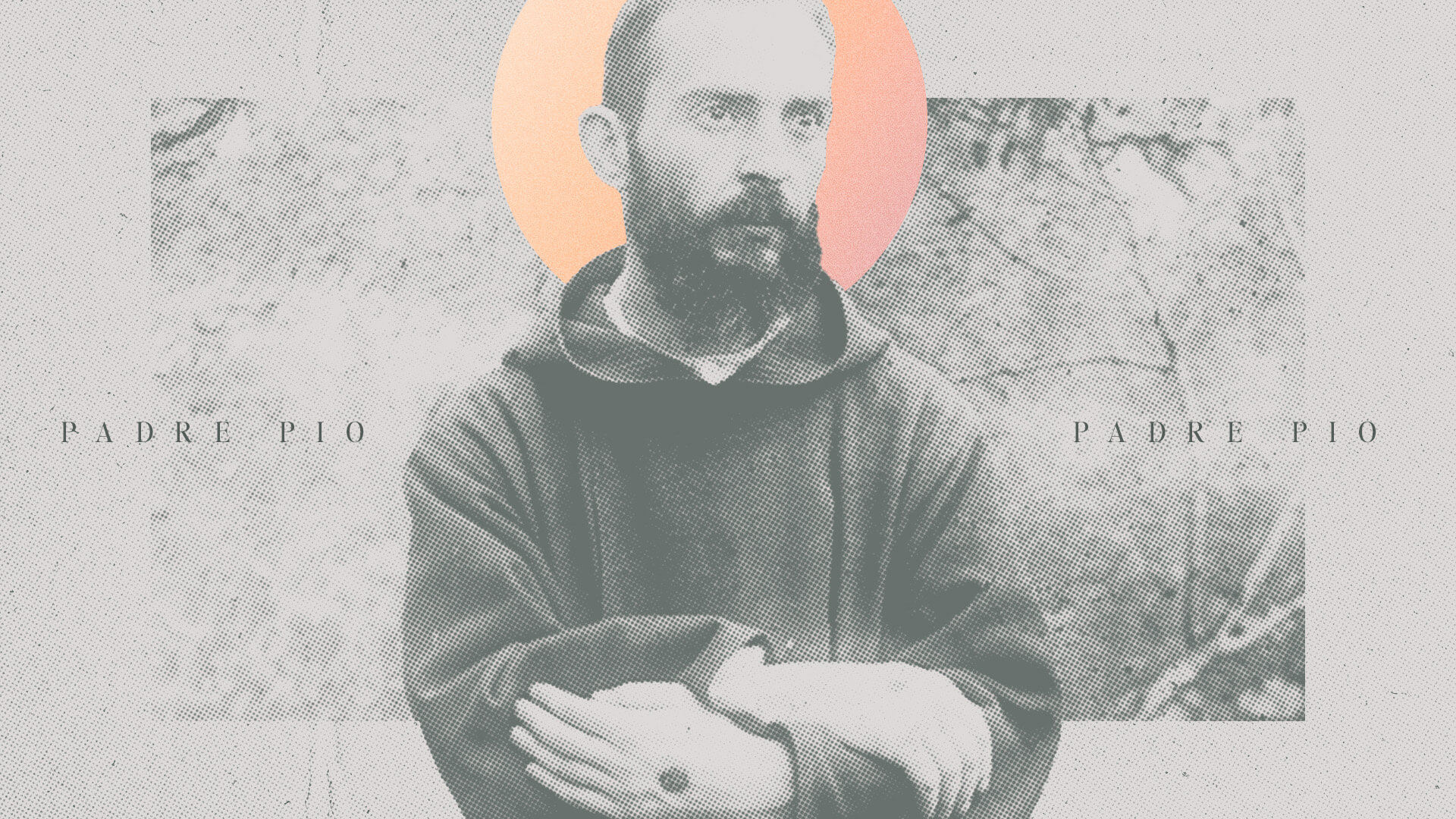
What does it take to effectively accompany another person on the journey to Heaven? Most people would agree that two of the essential ingredients are compassion and truth. But which one comes first?
Let’s look to Padre Pio (and Jesus) for the answer.
Padre Pio is, in many ways, famous for his direct and often harsh way of communicating the truth in the confessional.
Here are just two of the countless examples of how he spoke to others, particularly in the context of confession:
One day, a man told Padre Pio: “Father, I tell lies when I am with some friends of mine. I do it in order to make everybody happy”. And Padre Pio said: “Oh, do you want to go to hell by joking?!”
Another time, a man went to St. Giovanni Rotondo to confess to Padre Pio. When he finished the accusation of his sins Padre Pio said: “Do you have anything else to confess?” and he said, “No Father!” He repeated the question: “Do you have anything else to confess?” “No Father!” For a third time Padre Pio asked him: “Do you have anything else to confess?
At this third negative answer Padre Pio burst out in anger: “Go away! Go away! Because you are not reformed of your sins!”
The man was petrified because of the shame that he felt. Then he tried to say something but Padre Pio said: “Keep silent, gossiper, you have spoken enough…” And then he proceeded to tell the man his sins.
And there are many more examples just like these two. That’s why it may be surprising that, when I look at an image of Padre Pio, I see an advocate for gentleness with the self.
In many ways, what provoked a stern word or a blunt delivery, wasn’t an example of a lack of compassion for the waywardness of the human spirit. It was a response to the denial of reality. Reality is often experienced like light to an eye used to the dark. It is harsh, painful even, but clarifying. Padre Pio leveraged directness to help others confront reality. But once reality was revealed and accepted, compassion emerged.
Some have taken the stories of Padre Pio’s directness and his willingness to challenge others as if he offers some sort of formula for accompaniment and conversion.
- Step One: Deliver the truth, directly and without compromise
- Step Two: Once the truth is accepted, open the door to mercy
- Step Three: Encourage ongoing conversion
In other words, they will cite Padre Pio as a validation for harshness when dealing with the faults and shortcomings of others. But is this actually true, is this actually the formula, or is this just something we do to tame our own inner anxiety when trying to accompany others?
After all, Padre Pio is trying to model Jesus. And Jesus sometimes led with the truth. He called the Pharisees a brood of vipers, he told Peter to, “Get behind me Satan.” Jesus was tough and He did not tolerate lies.
But Jesus was also full of compassion. When referring to Himself, Jesus said, “I am gentle and lowly in heart, and you will find rest for your soul.” And He often led with compassion. Instead of speaking sternly or with commands, he offered love through gentleness. See the woman at the well or the widow who lost her son as examples of generous and gentle compassion.
Well, following in the footsteps of Jesus, this supposedly harsh and direct Padre Pio once wrote, “Those who aspire to the pure love of God need patience with themselves even more than with others.”
Or still in another instance, Pio wrote, “You must not be discouraged or let yourself become dejected if your actions have not succeeded as perfectly as you intended.”
This can lead to a degree of confusion, can’t it? What does it take to be good at accompanying others? Do I lead with truth, even if it is harsh or difficult to hear? Or do I lead with compassion, allowing mercy to provoke a deep and lasting conversion?
The answer is “Yes.”
Or rather, there isn’t a formula you can roll out at the beginning of every relationship and follow like a cookie-dough recipe to bake until a person is fully healed. It just doesn’t work that way. Instead it’s far more messy. It’s a relationship. One where listening is the beginning of love, challenges are the fruit of prayer and offered on a foundation of trust, and mercy is offered freely and fully.
To help you navigate the mystery, though, let me offer you two practical tips from the life of Padre Pio.
The first is this: Get really good at self compassion. If you can’t find compassion for your own parts and your own inadequacies then it’s going to be really hard to find it for others.
Here’s a gentle exercise you can try, inspired by both IFS and Padre Pio’s spiritual wisdom:
- Find a quiet space and take a few deep breaths. Invite God into this space.
- Notice a part of yourself that’s been struggling—maybe it’s anxious, angry, ashamed, or critical.
- Instead of pushing it away, greet it with kindness. Ask it gently: “What are you trying to protect me from?”
- Listen. Be present & patient.
- Close with gratitude for the God who made you, who sees you fully and loves you wholly.
And here’s the second tip: stay attuned to the Holy Spirit so you know when to offer mercy and when to challenge with what is true.
For Padre Pio, this meant a routine geared toward increasing attunement to the movements and rhythm of the Spirit through:
- Weekly confession
- Daily spiritual reading
- Frequent Communion
- Nightly examination of conscience
- Twice-daily meditation
Accompaniment is messy. It’s not formulaic. It takes hard work. Sincere listening. And a deep humility that recognizes its impossible to have all the answers all of the time. But it’s also beautiful. To be with someone, to really be with them, and offer them love in the form of mercy or in the form of truth is a privileged and honored space to be in.
I’ll leave you with one last word of encouragement from this great Saint:
“The Lord sometimes makes you feel the weight of the cross. Although the weight seems intolerable, you are able to carry it, because the Lord, in His love and mercy, extends a hand to help you.”