

As a frequent YouTube user, I am all too aware of the many influencers promoting self investment, self optimization, etc. I love that stuff. I think it has its place in our pursuit of excellence. These influencers often promote a radical self ownership. This self ownership is built off of a strong self awareness. A core question arises though, does all this focus on self actually make better people? Or does it create more self-absorption?
Left without clear direction, introspection can collapse into selfishness. It becomes a mirror with no window, a gaze turned endlessly inward with no light to guide it.
That, however, isn’t to say that self-reflection or growth in awareness is a bad thing. When it’s directed by the purpose of knowing, loving, and serving God, the inward journey can be transformed. Instead of creating a road to self-absorption and deepening insecurities, it can lead to lasting healing and holiness.
This was the great insight of Saint Augustine, who saw that understanding the self was not a destination, but a doorway into divine relationship.
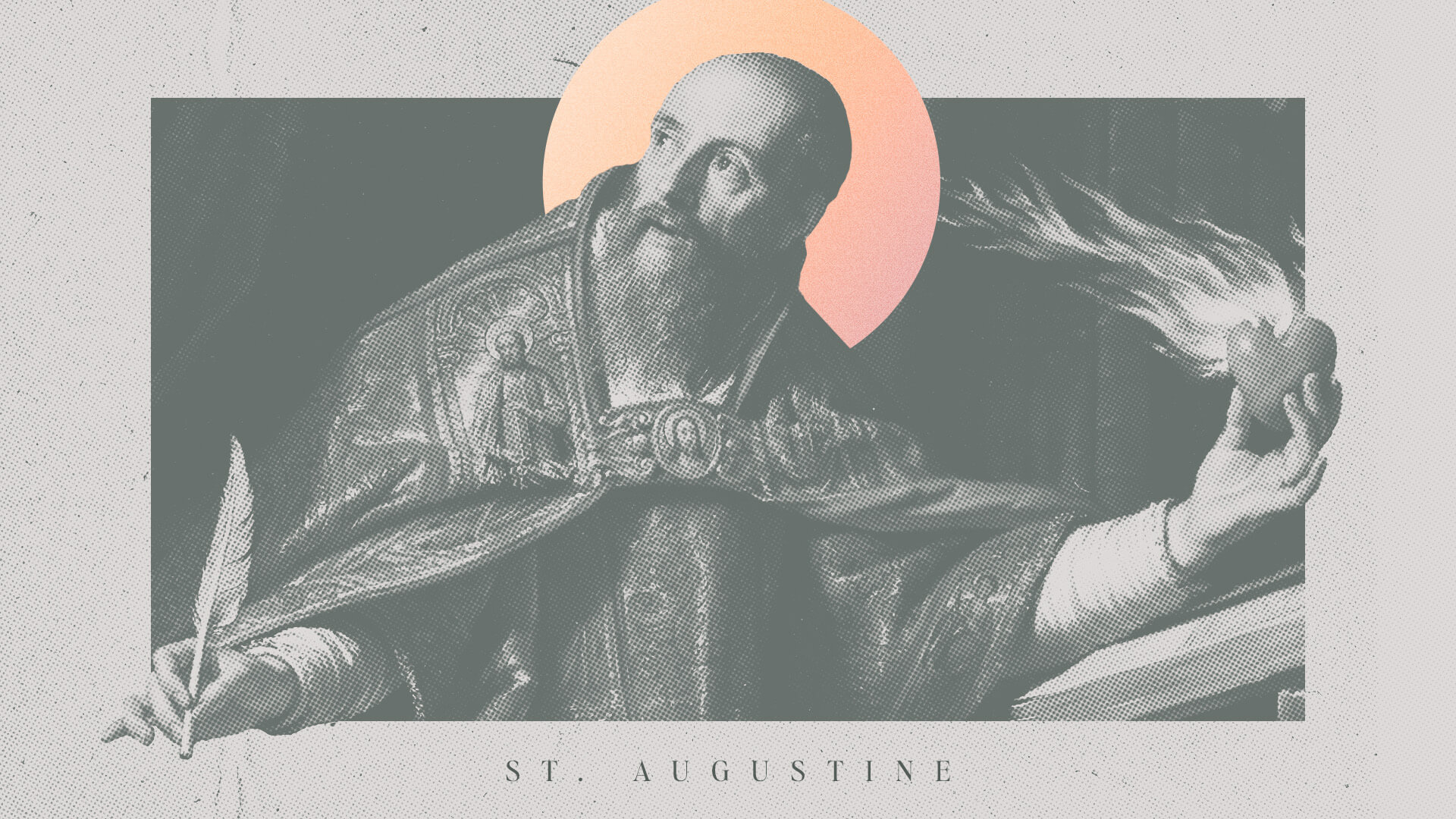
Saint Augustine of Hippo (354–430 AD) was a North African bishop, philosopher, and theologian whose writings profoundly shaped Western Christianity and philosophy. After a restless youth marked by ambition, sensuality, and intellectual searching, he underwent a profound conversion at age 31. He is best known for his works Confessions and The City of God, and for his teachings on grace, self-knowledge, and the inner life. A staunch opponent of Manichaeism—a belief that separates body and spirit. That error, still alive today in many forms, undermines the integrated view of the human person that Augustine promoted.
Psychology, properly understood, is the “study of the soul.” Integrated psychology seeks to unite body, mind, and spirit—and Augustine could be called the first psychologist. Long before modern schools of therapy, Augustine explored the dimensions of interiority—emotions, memory, desire, and relational love—in ways that resonate deeply with what many therapists work toward today.
Personally, I’ve found this to be true in my own life. At various times, I’ve sought professional accompaniment through therapy or mentorship. And when I’ve returned after time away, I’ve been struck by how unequipped I am to face my inner disharmony alone, how blind I can be to what’s actually going on inside. I might walk into a session thinking I know what’s wrong, only to discover that the real issue lies beneath the surface. I used to want quick answers and solutions. But lately, I’ve found a kind of reverent excitement in discovering unknown places in my heart. We are wonderfully complex and that complexity is not something to conquer but to explore. This distinction, between seeking quick fixes and exploring the self, is one of the key differences between selfishness and self-knowledge. A quick fix is about having my wants and needs met. Self-exploration, on the other hand, is about being seen and being known.
Augustine agrees. He once wrote, “Man is a great deep, O Lord. The hairs of his head are easier to number than his feelings, the movements of his heart” (Confessions, Book IV). His honesty about grief, sin, and longing paved the way for what we might call a early form of introspective psychology. Later thinkers like Freud and Jung would echo his insights about unconscious motivation and the layered self. Contemporary models like Richard Schwartz’s Internal Family Systems theory pick up this thread by helping individuals navigate their internal world as a path to integration and healing. These psychological approaches penetrate the interior life of the mind and potentially increase self awareness about one’s self. Certainly good but not quite good enough by Catholic standards.
But Augustine never stopped at the self. For him, interior exploration was not an end in itself—it cleared the way to a dialogue with God. In Soliloquies, he prays: “Lord, let me know myself and know You,” affirming the deep connection between self-knowledge and divine knowledge. This mirrors therapeutic practices that invite emotional awareness and inner reflection. Yet unlike secular psychology, Augustine insists that true self-understanding requires grace and is meant for self gift. It is God who reveals us to ourselves—not just so we can be understood, but so we can be transformed and offer our life as a gift of love to others.
This is the core of a Catholic view of healing: we are not a cluster of symptoms to be eliminated but embodied souls with a part to be played in a divine and cosmic drama. Even the parts of ourselves we might label as broken or shameful—when placed in God’s hands—can become movements in the playwright of our sanctification.
In one of his most famous prayers, Augustine writes: “You have called, you have cried, and you have pierced my deafness. You have shined out brightly and dispelled my blindness.” As a young man, he chased fulfillment in pleasure, power, and intellectual pride—but it all amounted to nothing apart from God. It was grace that opened his ears and eyes, not just to God, but to himself. And it was that grace—received through inward honesty and outward surrender for the purpose of self gift—that made him a saint.
So no, focus on the self is not selfish. Not when it is ordered toward love. Not when it is rooted in grace. Not when it is a path to becoming more fully who God made us to be. Self-focus, when rightly directed, is the gateway to self-gift. Through knowing ourselves, we come to know the God who made us—and through Him, we become capable of loving others more freely and fully.
May the intercession of Saint Augustine help us press inward and upward, toward the God who reveals us, heals us, and makes us whole.
How wonderful it is to read this beautiful reflection on the feast of St Augustine! Thank you for your wonderful work and God bless you always!